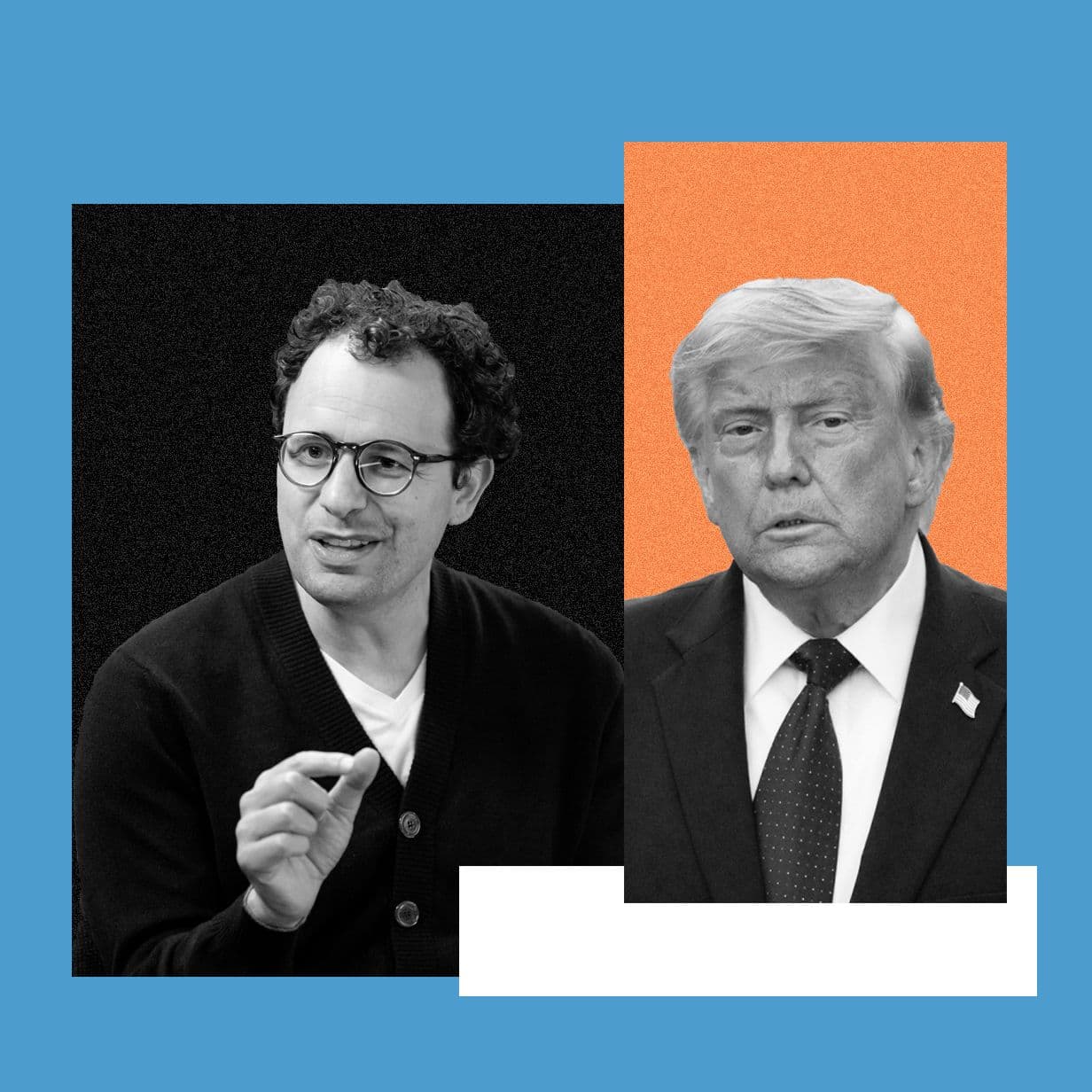
For years, people repeated that the internet had no borders and that software, once created, would travel almost automatically. The story of Fable 5 suggests that chapter is already closing. In the week of June 18 and 19, 2026, several reports in the United States described how the White House and Anthropic got trapped in a fast-moving dispute over security, export controls and international access to the model. The practical result was blunt: a powerful AI system became restricted, or simply unavailable outside the US, while the government and the company tried to negotiate rules in real time.
Beyond the technical detail, the episode matters because it makes a larger shift visible: artificial intelligence is moving into the same logic we used to associate with semiconductors, energy or telecommunications. Building a better model is no longer enough. You also have to survive the geopolitics that decide who can use it, from where, and under what conditions.
Fable 5 did not become a story because of marketing
What triggered the conflict was not a product campaign, but a mix of reports about vulnerabilities, official pressure and the absence of clear rules. Wired reported that the Trump administration forced Anthropic to pull Fable 5 and Mythos 5 from international availability while officials debated whether the lab had acted with enough caution. Business Insider added that the follow-up talks between the company and Washington are now trying to define a more stable standard for measuring security risks.
That suggests two things at once. First: new models are already being treated as strategic assets. Second: the regulatory framework is still too improvised to support a global industry without disruption.
The uncomfortable question: does closing borders work?
The short answer is that it may help in the very short term, but at a high cost. Restricting international access to a model can reassure those worried about leaks, jailbreaks or dual-use risks. It can also give the state the feeling that it is “containing” a sensitive technology. But that same decision breaks one of the central promises of commercial AI: global availability, distributed collaboration and continuous improvement through broad user communities.
Closing first and regulating later may also benefit the US ecosystem in the short run, while encouraging other countries to accelerate their own paths. If Washington signals that the most powerful models can be kept at home by political decision, Europe, China, India and several regional players have even more reasons to invest in technological autonomy.
What this means for the everyday economy
At first glance, a fight between Washington and Anthropic may seem far removed from household finances. But it is not. More and more tools used for work, education, customer support, design, programming and productivity depend on external AI layers. If access to those layers becomes unstable by country, licence or geopolitical decision, then the operating costs of small businesses, freelancers and digital products in peripheral markets become less predictable as well.
In Latin America, this could create a new technological inequality. Not just between those who use AI and those who do not, but between those who get access to the best models and those who receive downgraded, delayed or outright blocked versions. For a region that often arrives late to critical infrastructure, that gap matters.
The other competition: the United States versus Chinese openness
The broader backdrop is also clear. While the US tightens controls over chips, models and international diffusion, China keeps advancing a different narrative: more open software, broader circulation and lower prices as a competitive weapon. That does not mean Beijing is acting out of altruism. It means it found an effective way to compete for influence.
That is why the dispute around Fable 5 is not just an Anthropic problem. It is a sign of the ecosystem that may emerge: one in which US models are more powerful but more closed, and another in which Chinese models may be less prestigious in some segments but easier to run, adapt and distribute.
What Birdi should watch
For Birdi, and for any product built around real users, the lesson is concrete. Technological dependence is no longer measured only by provider or price, but by jurisdictional stability. If a critical tool can disappear outside the United States because of a dispute that lasts a matter of days, then technical strategy has to include redundancy, interoperability and the option to combine closed models with open alternatives.
In other words, digital sovereignty has stopped being a decorative concept. It has become risk management.
The signal of this week
Fable 5 lasted only briefly as a symbol of open borders and much longer as an example of closed ones. The big question is not only what will happen to Anthropic in the coming days. The more useful question is whether the future of commercial AI will be a global market or an archipelago of models that need passports.
If the second option prevails, Latin America will have to decide quickly whether it wants to wait its turn or build enough room of its own not to depend entirely on decisions taken thousands of miles away.
Sources: