Brazil continues to offer one of the most interesting economic pictures in the region: inflation still running above target, the Selic rate still at very high levels and, at the same time, a daily revolution in the way people move money. If you look only at the monetary debate, the picture seems difficult. If you look at payment infrastructure, you see something else: a country already carrying out part of its financial modernisation in real time.
This week, the international focus turned again to Brazil's central bank. Annual inflation through May stood at 4.72%, still above the 3% target, while the monetary authority cut the benchmark rate to 14.25% amid softer growth and high external uncertainty. It is an uncomfortable combination: cutting too fast can unanchor expectations; keeping rates high for too long cools credit, consumption and investment.
What matters is not only the rate, but how money moves
For ordinary users, however, the more useful question is not always where the Selic stands, but how people pay, how they get paid and how much it costs to move money. That is where Pix comes in. What began as an instant payment tool became a structural shift in Brazil's economy: it reduced dependence on cash, put pressure on cards, accelerated transfers and made 24/7 payments feel almost natural.
That detail may sound technical until it reaches everyday life. A system that is cheap, immediate and widely used does not just make a purchase easier; it also reduces friction for freelancers, small shops, delivery workers, market sellers and families managing tight incomes. In an economy where the financial cost of money remains high, any infrastructure that makes circulation cheaper gains social and political weight.
Pix as silent economic policy
Brazil did not invent high inflation or demanding real rates, but it moved ahead of much of the region in creating a central bank-backed payment system used at mass scale. That move has effects that go beyond convenience. When a country builds an efficient public rail for payments, it also improves banking competition, traceability, formalisation and collection speed.
That is why Pix can no longer be read as just a fintech tool. It is part of economic policy. It allows money to arrive faster, it reduces dependence on expensive intermediaries and it lets more people operate with less friction. For a family, that may mean something as concrete as not having to wait days to access income. For a business, it means getting paid instantly without giving up margin in fees.
The geopolitical front is also moving into payments
There is a deeper layer as well. The global debate over money is no longer only about who issues the dominant currency, but also about who designs the infrastructure through which that money moves. In that sense, Pix has become an international reference. It is no surprise that Brazil's experience now appears in discussions about monetary sovereignty, national platforms and competition with private networks dominated by global players.
That also explains why the conversation is no longer confined to Brazil. Other countries are looking at Pix as a possible template for cheaper, more immediate payments that depend less on old financial rails. That external interest also says something else: the region can produce useful infrastructure, not just consume it.
High rates above, efficiency below
Brazil's paradox in 2026 is powerful. At the macro level there is still caution: sticky inflation, delicate monetary policy and an international environment still shaped by energy, fertilisers and volatility. At the micro level there is a layer of financial efficiency that has already changed habits. Both things can coexist. In fact, they already do.
That also leaves a lesson for the rest of Latin America. Modernising everyday finance does not require waiting until every macro problem is solved. Sometimes it happens at the same time. And when it does, households notice before many reports do: they get paid faster, they pay more easily and they depend less on costly intermediaries.
What Birdi should watch closely
From Birdi's perspective, Brazil remains one of the most important laboratories in the region. Not only because of its size or the Selic, but because of the relationship between public infrastructure, inclusion and operating speed. If the future of everyday finance in LATAM depends on immediate payments, lower costs and better bridges between people and platforms, Brazil today is not just news. It is a preview.
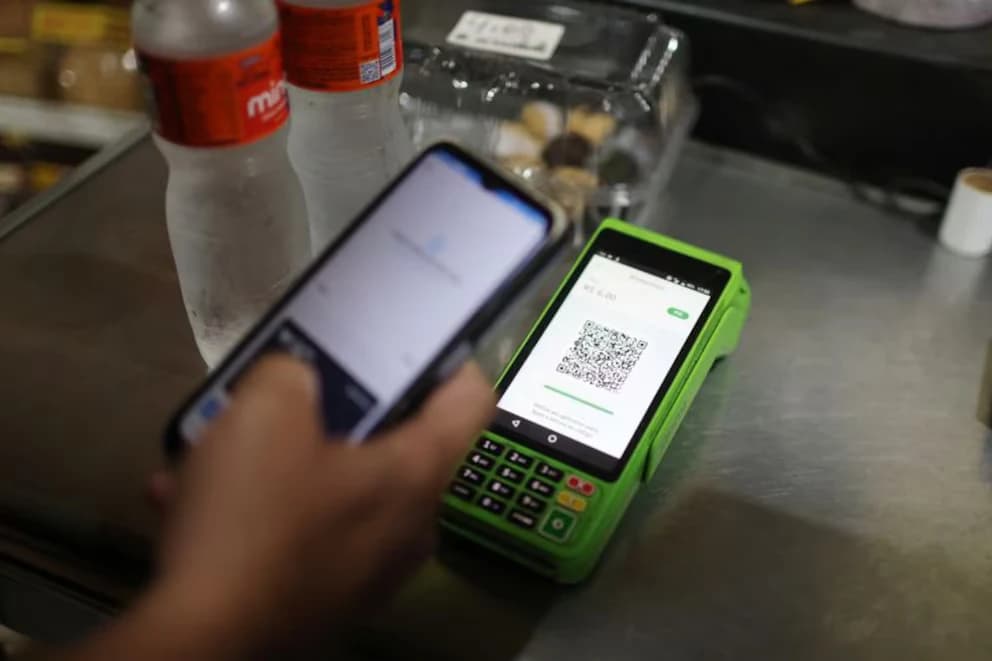
And that may be the real story of the week: while the market debates how quickly the rate can fall, the most tangible transformation for millions of people is still happening on a screen, through a QR code and with an instant confirmation.
Sources: