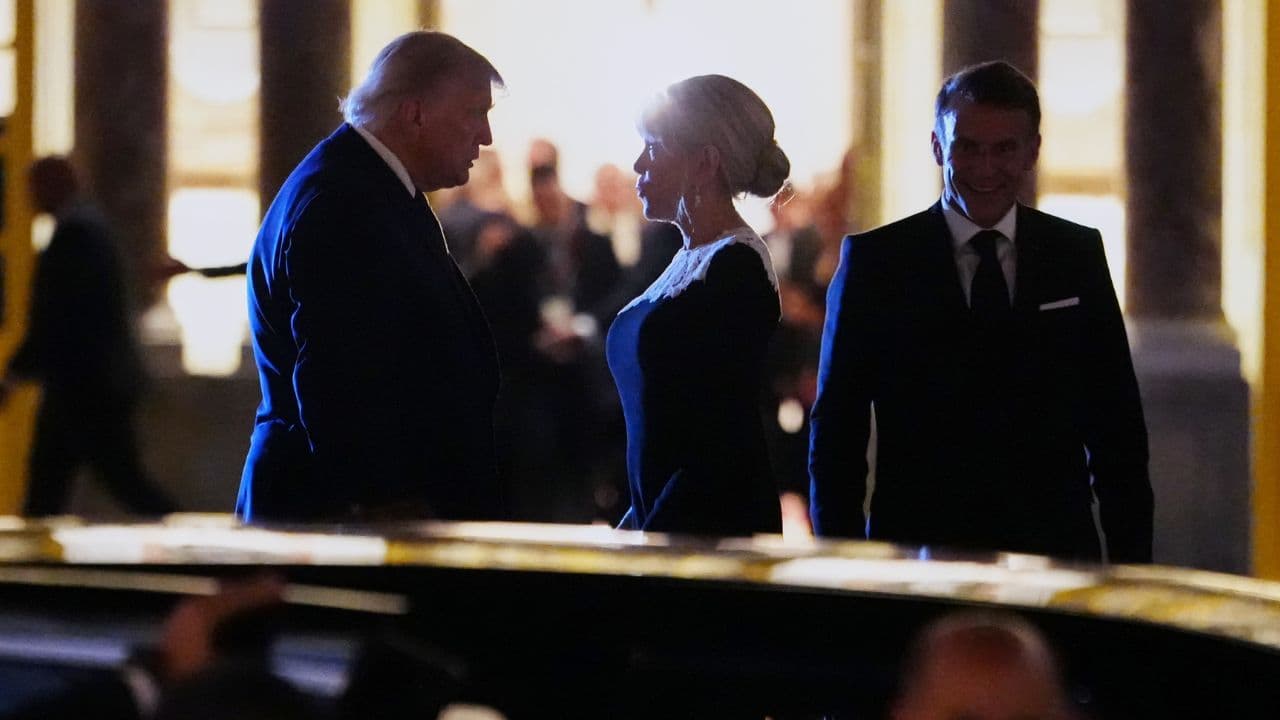
The scene was designed to look like history with a capital H: Trump at Versailles, Macron as host, a nighttime signature, applause, cameras and the symbolic echo of a palace built for the theatre of power. The problem is that scenery does not always correct substance. In this case, Trump's signing at Versailles projected authority, but it also exposed a foreign policy more inclined toward immediate impact than toward strategic architecture.
The form was impeccable. The content, much less so.
Versailles as stage, not doctrine
The decision to sign the initial understanding with Iran there was a perfect move for image. It turned a dinner into a global stage and gave Trump an instant leadership photograph. AP reported that even many French attendees did not expect the signing to happen at that moment. The desired effect was clear: surprise transformed into authority.
But that same theatrical quality also reveals the problem. When diplomacy depends too much on timing, gesture and scenic twist, it begins to look less like strategic architecture and more like a sequence of tactical decisions assembled on the fly.
The agreement shows retreat, not victory
The hardest criticism does not come from Trump's domestic opponents, but from the comparison between what Washington had previously demanded and what it ended up accepting. The Guardian underlined that the new understanding with Iran erases several red lines from 2025: it accepts domestic enrichment under supervision, lowers earlier ambitions and postpones key definitions.
That does not automatically make the deal bad. Sometimes retreat prevents a larger crisis and a global recession. The problem is another one: the White House spent months defending a maximalist posture and ended up signing an understanding that looks more like an admission of limits than the confirmation of a doctrine of its own.
A foreign policy governed by vertigo
There is a kind of leadership that feeds on vertigo. It does not build certainty; it builds imbalance. It tries to force everyone else to react in real time, as if the speed of the gesture itself were enough proof of strategic lucidity. That style can work in the short term in trade negotiation, in campaigns or even in domestic politics. But in high-sensitivity geopolitics it usually carries a cost: it multiplies noise, weakens signals and makes it harder to distinguish between an intelligent manoeuvre and a rushed correction.
The signing in Versailles carries some of that logic. A great deal of scenic instinct, little evidence of a long board. A great deal of personal centrality, little institutional clarity.
Macron understood the value of the place better
There is also an obvious irony. If anyone read the value of Versailles correctly in this sequence, it was Macron. Le Monde showed how the French president once again used the palace as an extension of the Élysée: a place where the architecture itself adds hierarchy, solemnity and historical meaning.
Trump used that stage. Macron managed it.
That matters because the final photograph can mislead. At first glance it looks like a shared triumph of initiative. Looked at more closely, the scene shows a host who knew how to turn a national monument into a tool of influence, and a guest who needed that scenery in order to present as victory what was, in substance, a much more ambiguous negotiation.
Tactics without doctrine
When a foreign policy leans too heavily on the surprise effect, it risks confusing movement with direction. That appears to be the case here. Trump preserved the photo, but it is not clear that he preserved the doctrine. He won a headline, but at the cost of exposing how much Washington had to retreat from its previous rhetoric. In foreign policy, that distance between narrative and result matters.
The signal for the rest of the world
For Europe, the Middle East and peripheral economies such as those of Latin America, the episode leaves a concrete lesson: depending on decisions made by such a personalist leadership means living with a high degree of tactical uncertainty. The superpower does not stop being a superpower, but its predictability diminishes. And when predictability falls, the value of strategic autonomy rises.
The balance of Versailles
Trump's signing in Versailles had the aesthetics of a great geopolitical move. What it did not have, at least for now, is the solidity of a long strategy. There was scenery, speed and symbolic appropriation of the moment. There was much less, by contrast, of a stable doctrine capable of organising allies, adversaries and medium-term costs.
Versailles showed a Trump still effective at dominating attention. Not necessarily a Trump capable of turning that attention into a durable diplomatic architecture.
Sources: