Mercosur-EU Agreement: A New Financial Path for Argentina
01/16/2026
By: Birdi fintech
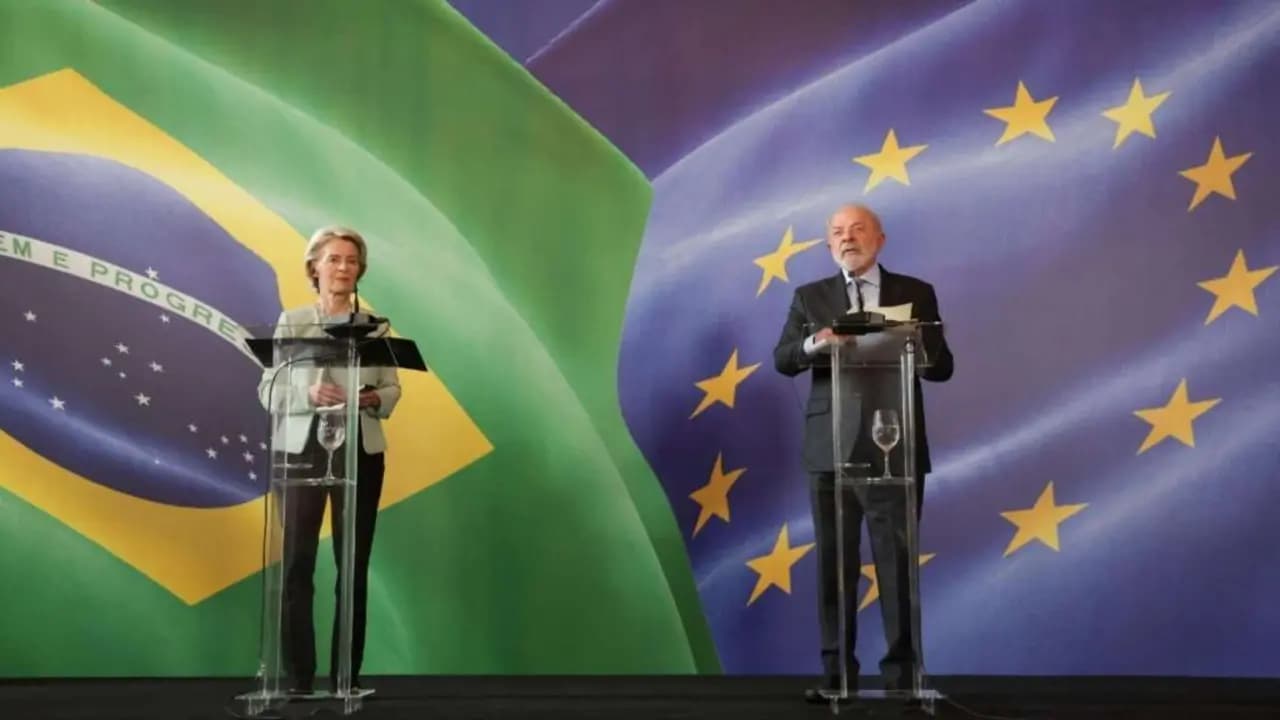
Tomorrow in Asunción, Paraguay, a historic milestone will take place in the Latin American region. After more than two decades of negotiations, this treaty not only redefines bilateral trade but also establishes a new financial and investment paradigm for Argentina.
This new scenario presents not only a path of economic relief but also one of uncertainties. Although a safe harbor has been reached for both parties, doubts remain about how it will unfold in each country of the regions. Argentina is no exception to this new landscape, and in some sectors where the technological gap and structural costs are pronounced, trade liberalization is perceived less as an immediate advantage and more as a survival challenge. The transition from a protected model to full integration with the European bloc will require financial reengineering to prevent competitive asymmetry from translating into an erosion of the national industrial fabric. What would be the benefits and challenges of this entire scenario in the financial sector? How would Birdi enter as a game piece?
An Anchor of Stability in a Sea of Uncertainty
For Argentina, the most immediate financial benefit is credibility. By aligning with EU regulatory standards, the country offers a framework of legal certainty that reassures foreign investors. The agreement acts as an "institutional anchor" that reduces risk perception, facilitating the flow of Foreign Direct Investment (FDI) toward strategic sectors such as lithium, green hydrogen, and especially the knowledge economy.
Financial Services: Less Bureaucracy, More Competition
The financial services chapter of the treaty seeks to eliminate entry barriers for banking entities and fintechs. This means:
Reduction of transactional costs: The harmonization of compliance standards will facilitate capital transfers between Buenos Aires and Madrid, Paris, or Berlin. As stated in Article 11.2 of the agreement:
"Each Party shall permit, in a freely convertible currency and in accordance with the Articles of Agreement of the International Monetary Fund adopted at the United Nations Monetary and Financial Conference held in Bretton Woods, New Hampshire, on July 22, 1944 (hereinafter, the 'Articles of Agreement of the International Monetary Fund'), any payment or transfer relating to transactions on the current account of the balance of payments that fall within the scope of this Agreement."
A 15-Year Window of Opportunity
It is important to note that the agreement provides for progressive tariff reduction. What does this mean? The reduction of tariffs by up to 91% on all products imported from Mercosur, which means that once the treaty is signed, it will not happen all at once but gradually. Argentina has a window of time to adapt its industry while receiving immediate benefits in service exports.
The Fintech Revolution: The Birdi Finance Factor
However, major treaties are often perceived as something distant for the average citizen or small exporter. This is where technology acts as the necessary bridge for inclusion. Platforms like Birdi Finance represent the modern face of this agreement.
The treaty promotes Electronic Commerce and the simplification of cross-border payments. For the thousands of Argentine professionals who export services to Europe, the agreement provides the legal framework, but Birdi provides the operational tool.
By enabling the collection of fees from abroad in an agile and secure manner, Birdi Finance positions itself as a key player in the "fintech-ization" of the agreement. The ability to move capital transparently and under international security standards (such as those required by the EU) allows a programmer in Córdoba or a consultant in Buenos Aires to feel financially integrated with Europe, without the obstacles of traditional banking.
References:
- Mercosur-EU Association Agreement - European Commission
- World Bank - Trade and Integration
- Birdi Finance - How it works
Image: Mercosur and European Union flags - Mundiario